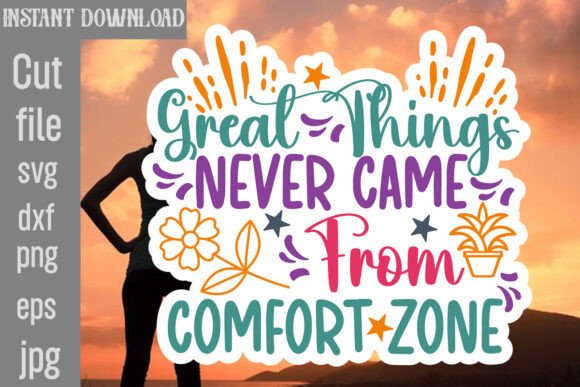
Great Things Never Came from Comfort Zone
As someone who has spent years stitching, designing, and reviewing digital assets for the craft industry, I often find myself scrolling past generic motivational quotes. They usually feel mass-produced, lacking the grit that makes a handmade item truly special. However, when I pulled up Great Things Never Came from Comfort Zone, something felt different. It isn't just another vector file; it carries a specific energy that speaks directly to anyone building a business or pushing through personal growth. This review breaks down exactly how this design performs in real-world embroidery scenarios, moving beyond the digital preview to see how it holds up under the needle.
The First Impression: Mood and Layout
The immediate feeling you get from Great Things Never Came from Comfort Zone is one of resilient optimism. The phrase itself is a classic trope, but the execution here suggests a retro-inspired aesthetic that fits perfectly with current trends in apparel and home decor. Unlike many designs that rely on complex imagery, this piece leans heavily on typography and attitude. For an embroidery designer, this is a double-edged sword. The success of the final product relies entirely on font legibility and the balance of negative space.
In its digital form, the layout feels balanced and confident. It doesn't scream for attention with chaotic colors but rather whispers a strong message. When I imagine this stitched onto fabric, the visual personality shifts from a simple sticker graphic to a statement piece. It creates a mood of "I am doing the work," which is exactly what customers want to see on their custom tote bags, sweatshirts, or baby onesies. The design avoids being overly cutesy, making it versatile enough for both serious boutique branding and casual hobbyist projects.
Real-World Application: From Screen to Stitch
Let's talk about putting this into practice. I recently considered using Great Things Never Came from Comfort Zone for a batch of custom embroidered patches intended for a local maker's market. The goal was to create a small shop merchandise line that resonated with other entrepreneurs. The challenge was translating a flat SVG into a tactile experience.
On a sturdy canvas tote bag, this design shines. The phrase is long enough to span the width of the bag without looking cramped, yet short enough to remain readable from a distance. The retro vibe pairs beautifully with earth-toned threads like mustard yellow, burnt orange, or deep forest green. If you are a small business owner looking to create branded aprons or kitchen towels, this design adds a layer of sophistication that elevates the perceived value of the finished product. It transforms a standard utility item into a conversation starter.
I also envision this working exceptionally well for holiday gifts or personalized products. Imagine a family reunion where everyone wears a matching sweatshirt featuring this quote. It serves as a subtle nod to the challenges they have overcome together. For Etsy sellers, this is a prime candidate for a best-selling listing because it targets a specific emotional need: validation during difficult times. The design fits naturally into categories like Mental Health Awareness or general positivity, allowing you to tap into multiple search audiences without forcing the keyword.
Technical Considerations and Fabric Choices
While the concept is strong, the execution requires technical precision. As an experienced reviewer, I have to point out where Great Things Never Came from Comfort Zone might struggle if not handled correctly. The primary concern lies in stitch density and thread color contrast.
If you attempt to stitch this on a thin, stretchy fabric like a lightweight t-shirt without proper stabilizer, the lettering will likely pucker. The text needs a stable foundation to maintain its shape. I recommend using a cut-away stabilizer for items that will be washed frequently, such as hats or aprons, to ensure the design remains crisp over time. On dark fabrics, the choice of thread becomes critical. A light, retro-style font might get lost against a black background unless you use a high-density fill stitch or add a contrasting outline. Always test your thread colors on scrap fabric first to ensure the message remains clear.
Another area requiring caution is the hoop size. While this design works well on larger areas like pillow covers or blankets, attempting to fit it into a small 4x4 hoop can result in crowded lettering. The details in the font may become indistinguishable if the scale is too small. Furthermore, if you are planning to use this as an applique design, the edges of the letters need to be clean. Any jagged lines in the source file could translate into messy satin stitches, ruining the professional look of the finished product.
Where to Use with Caution
- Small Hoop Sizes: Avoid using this on tiny items like ear tags or small wristbands where the text will be unreadable.
- Textured Fabrics: Heavy knits or boucle fabrics can obscure the fine details of the typography.
- Curved Surfaces: Embroidering this on a curved cap brim requires careful digitizing to prevent the text from warping unnaturally.
- Dense Stitch Areas: Ensure the fill stitch density isn't too high, or the fabric may become stiff and uncomfortable.
Impact on Brand and Customer Trust
In the world of handmade goods, the quality of the embroidery speaks volumes about the creator. A poorly executed design can make a $50 item look cheap, while a well-stitched one justifies the price tag. Great Things Never Came from Comfort Zone has the potential to boost customer trust because of its relatable message. When a buyer sees a crisp, professional application of this quote, they associate that quality with the entire brand.
For commercial embroidery projects, clarity is king. If the text is blurry or the spacing is off, the motivational impact is lost. Customers are more likely to engage with a product that looks intentional and polished. By paying attention to the details—like ensuring the thread colors pop against the fabric—you show that you care about the presentation. This attention to detail is what turns a casual browser into a loyal repeat customer.
Practical Designer Notes for Success
Before you load this file into your machine, there are a few steps every designer should take. First, always check the licensing terms provided with the Motivational Sticker SVG to confirm whether you can sell finished items made with this design. Some files are for personal use only, and violating these terms can lead to legal trouble for your small shop.
Second, run a test stitch on scrap fabric. This allows you to inspect small details and verify that the stitch density is appropriate for the material you are using. Check whether the design works for both light and dark backgrounds by creating a printable mockup. If you plan to sell digital product previews, ensure the image resolution is high enough to showcase the texture of the stitches.
Finally, consider the end user. Are you making a gift for a friend, or are you producing inventory for an Etsy store? The answer dictates your approach to finishing touches. For a personalized gift, hand-finishing the edges or adding a custom backing can make the project feel extra special. For a commercial product, consistency is key. Every item must look identical to maintain brand integrity.
Ultimately, Great Things Never Came from Comfort Zone is more than just a collection of letters; it is a tool for creators to express resilience. Whether you are decorating a baby item, updating your workshop's signage, or launching a new line of merch, this design offers a solid foundation. With the right technique and a bit of creative foresight, it can become a standout piece in any portfolio of graphics or crafts.